Buy therese.eu ?
We are moving the project
therese.eu .
Are you interested in purchasing the domain
therese.eu ?
domain@kv-gmbh.de · 0541-91531010
Buy therese.eu ?
How do you calculate the braking distance, the braking process, and the braking deceleration?
The braking distance can be calculated using the formula: braking distance = (initial velocity^2) / (2 * deceleration), where the deceleration is the rate at which the vehicle slows down. The braking process involves the driver applying the brakes, which causes friction between the brake pads and the wheels, leading to a decrease in the vehicle's speed. The braking deceleration can be calculated by dividing the change in velocity by the time it takes for the vehicle to come to a complete stop. **
How do you calculate the braking time and braking distance?
Braking time and braking distance can be calculated using the formula: Braking distance = (initial velocity^2) / (2 * deceleration) Where initial velocity is the speed of the vehicle before braking, and deceleration is the rate at which the vehicle slows down. Braking time can be calculated by dividing the braking distance by the initial velocity. These calculations are based on the assumption of constant deceleration, and may vary depending on factors such as road conditions and the vehicle's braking system. **


Similar search terms for Braking
Top-Angebote
Products related to Braking:
-
Almara Soap Aromatherapy Meditation essential oil 10 mlAlmara Soap Aromatherapy Meditation, 10 ml, Essential oils Home Scents, You can change the scent of your home as often as you want to – and Almara Soap Aromatherapy Meditation scented oil is the perfect product for this task. With only a few drops, the charming and delicate aroma starts getting released into the air and fills every room while caressing your senses. Characteristics: a clever and elegant way to fill your home with fragrance easy to use the right amount a woody fragrance a spicy aroma Ingredients: 100% natural ingredients with essential oils How to use: Judge the amount of oil you need by the required intensity of your home fragrance. The length of time the scent will be released for depends on the temperature, ventilation and the placement of the aroma source.7,31 £*Shipping: 3,99 £Secure redirect to the provider
-
DK A Little Book of Self Care Collection 2 Books Set (Ayurveda, Aromatherapy)A Little Book of Self Care Collection 2 Books Set (Ayurveda, Aromatherapy) Ayurveda Make Ayurveda an indispensable part of your daily routine with this step-by-step guide to holistic balance and wellness. For a natural approach to self-healing, alternative medicine, and wellness, expert Sonja Shah-Williams has tailored remedies including Ayurveda recipes, skincare, yoga, and mindful meditation techniques. Harness the power of alternative therapies and discover: - What Ayurveda is and the benefits of the practice - Easy to follow, step by step illustrated guide to Ayurvedic practices - Ayurvedic super-foods and recipes - How to easily incorporate holistic practices into daily life - Positive affirmations, mindfulness techniques and exercises Aromatherapy Make aromatherapy an indispensable part of your everyday self-care routine with this comprehensive holistic healing guide. If you're in search of a more natural approach to health and wellbeing, expert Louise Robinson has created over 40 bespoke remedies, blends, and rituals to transform your body and mind - the perfect antidote to the stresses of everyday life. Science now supports what practitioners have long known: that oils derived from plants have powerful therapeutic properties, working holistically on mind, body, and spirit. From massage oils to boost immunity, to room diffusers to help you sleep - this book is your complete guide to essential oils and their healing properties.9,95 £*Shipping: 2,99 £Secure redirect to the provider
-
DK Practical Ayurveda by Sivananda Yoga Vedanta Centre - Hardback Wellness Guide to Doshas, Diet, Yoga & Natural Self-Care BalanceDiscover the principles of Ayurveda, a traditional Indian system of medicine, with this beautifully presented hardback guide. Written by the Sivananda Yoga Vedanta Centre, it helps readers identify their unique dosha, or mind-body constitution, and provides practical advice on how to restore balance through small daily adjustments to diet, movement, sleep, and mindset. The book includes clear, accessible, and richly illustrated guidance suitable for both beginners and experienced wellness seekers. It opens with simple self-assessment tools to help readers determine whether they are predominantly Vata, Pitta, or Kapha, and chapters cover nutrition, movement, and other aspects of Ayurvedic living. Published by DK, this hardback edition is a comprehensive introduction to the science of life, which views health as a state of balance between body, mind, and spirit.7,99 £*Shipping: 2,99 £Secure redirect to the provider
-
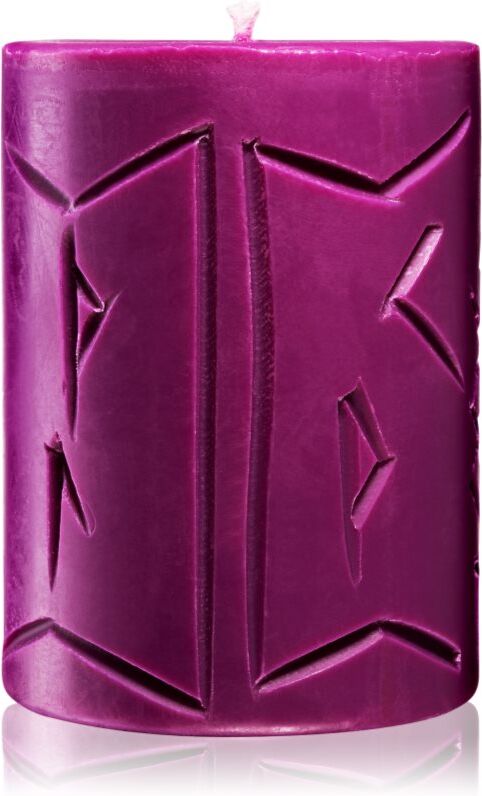
Smells Like Spells Rune Candle Mimir scented candle (relaxation/meditation) 300 gSmells Like Spells Rune Candle Mimir, 300 g, Scented Candles Home Scents, The mood and atmosphere of a space can be changed instantly by fragrance. The Smells Like Spells Rune Candle Mimir scented candle fills your home with fragrance and creates a pleasant atmosphere for relaxation and those everyday moments spent on your own or with loved ones. The flickering, quietly crackling flame also adds a warm, soothing atmosphere to the room. Characteristics: a fresh fragrance vegan product ideal as a gift long burning time handmade clean burning a luxurious accessory for any room Ingredients: 100% soy wax 100% natural ingredients GMO-free paraffin-free non-toxic formula cotton wick How to use: For optimal burning, we recommend regularly trimming the wick down to the recommended length. Follow the instructions included.12,67 £*Shipping: 3,99 £Secure redirect to the provider


-
What are the differences between braking to walking speed and braking?
Braking to walking speed typically involves gradually reducing speed until coming to a complete stop, whereas braking refers to the act of slowing down a moving vehicle. When braking to walking speed, the goal is to smoothly decelerate without any sudden stops, while braking may involve more forceful actions to slow down quickly. Additionally, braking to walking speed is often used in situations where a vehicle needs to stop at a precise location, such as at a crosswalk or intersection. **
-
How do you calculate braking time and braking distance in physics?
In physics, braking time and braking distance can be calculated using the equations of motion and the principles of kinematics. The braking time can be calculated using the equation t = v/u, where t is the braking time, v is the final velocity, and u is the initial velocity. The braking distance can be calculated using the equation d = (v^2 - u^2) / (2a), where d is the braking distance and a is the deceleration. These equations take into account the initial and final velocities, as well as the deceleration of the object to determine the braking time and distance. **
-
Is braking a reflex?
Braking can be considered a reflex in certain situations. When a driver reacts to a sudden obstacle or hazard on the road by immediately pressing the brake pedal, it can be seen as a reflexive action. This is because the response is automatic and occurs without conscious thought. However, braking can also be a learned behavior, as drivers are trained to use their brakes in specific situations through practice and experience. Therefore, while braking can be a reflex in some cases, it can also be a learned and intentional action. **
-
What is the difference between a full braking and an emergency braking?
Full braking refers to applying the brakes with maximum force in a controlled manner to slow down or stop the vehicle. This can be done in response to normal traffic conditions or when approaching a stop sign or traffic light. On the other hand, emergency braking is a sudden and forceful application of the brakes in response to an unexpected hazard or danger, such as a pedestrian stepping into the road or a vehicle suddenly stopping in front. Emergency braking is typically done to avoid a collision and requires quick reflexes and a strong, immediate response from the driver. **


What is the formula for braking acceleration and braking time in physics?
The formula for braking acceleration is given by \( a = \frac{v_f - v_i}{t} \), where \( a \) is the braking acceleration, \( v_f \) is the final velocity, \( v_i \) is the initial velocity, and \( t \) is the time taken to come to a stop. The formula for braking time can be calculated using the equation \( t = \frac{v_f - v_i}{a} \), where \( t \) is the braking time. These formulas are used to calculate the rate at which an object slows down when braking. **
What is the difference between braking with a clutch and braking without?
Braking with a clutch involves pressing the clutch pedal while simultaneously applying the brakes, which disengages the engine from the transmission and allows the vehicle to coast to a stop. This method is often used in manual transmission vehicles to prevent stalling. On the other hand, braking without using the clutch means simply applying the brakes without disengaging the engine from the transmission, which can cause the vehicle to stall if the engine speed drops too low. In summary, the main difference is that braking with a clutch allows the vehicle to coast to a stop without stalling, while braking without the clutch can potentially lead to stalling if not done properly. **
Top-Angebote
Products related to Braking:
-
All Categories Goods Wheel Speed Sensor Right & Left, Enhance Steering & Braking Stability, Long Lasting Performance Wheel Speed Sensor Right & Left, Enhance Steering & Braking Stability, Long Lasting PerformanceImprove your vehicle's braking and steering performance with 2 pcs Wheel Speed Sensors Right & Left, designed to enhance your driving experience. These 100% factorytested sensors offer stable, longlasting performance, providing you with the...46,97 $*Shipping: 0,00 $Secure redirect to the provider
-
Uplift Essentials Titanium Brake Lever Piston MTB Hydraulic Seal Repair Kit High Yield Braking Interaction Hub 1 SetAchieve deceleration optimization with this Precision Titanium Alloy Brake Piston. Specifically engineered for mechanical transparency, this highperformance technical tool acts as a vital tool for actuation efficiency, neutralizing the limitations...57,97 $*Shipping: 0,00 $Secure redirect to the provider
-
Almara Soap Aromatherapy Meditation essential oil 10 mlAlmara Soap Aromatherapy Meditation, 10 ml, Essential oils Home Scents, You can change the scent of your home as often as you want to – and Almara Soap Aromatherapy Meditation scented oil is the perfect product for this task. With only a few drops, the charming and delicate aroma starts getting released into the air and fills every room while caressing your senses. Characteristics: a clever and elegant way to fill your home with fragrance easy to use the right amount a woody fragrance a spicy aroma Ingredients: 100% natural ingredients with essential oils How to use: Judge the amount of oil you need by the required intensity of your home fragrance. The length of time the scent will be released for depends on the temperature, ventilation and the placement of the aroma source.7,31 £*Shipping: 3,99 £Secure redirect to the provider
-
DK A Little Book of Self Care Collection 2 Books Set (Ayurveda, Aromatherapy)A Little Book of Self Care Collection 2 Books Set (Ayurveda, Aromatherapy) Ayurveda Make Ayurveda an indispensable part of your daily routine with this step-by-step guide to holistic balance and wellness. For a natural approach to self-healing, alternative medicine, and wellness, expert Sonja Shah-Williams has tailored remedies including Ayurveda recipes, skincare, yoga, and mindful meditation techniques. Harness the power of alternative therapies and discover: - What Ayurveda is and the benefits of the practice - Easy to follow, step by step illustrated guide to Ayurvedic practices - Ayurvedic super-foods and recipes - How to easily incorporate holistic practices into daily life - Positive affirmations, mindfulness techniques and exercises Aromatherapy Make aromatherapy an indispensable part of your everyday self-care routine with this comprehensive holistic healing guide. If you're in search of a more natural approach to health and wellbeing, expert Louise Robinson has created over 40 bespoke remedies, blends, and rituals to transform your body and mind - the perfect antidote to the stresses of everyday life. Science now supports what practitioners have long known: that oils derived from plants have powerful therapeutic properties, working holistically on mind, body, and spirit. From massage oils to boost immunity, to room diffusers to help you sleep - this book is your complete guide to essential oils and their healing properties.9,95 £*Shipping: 2,99 £Secure redirect to the provider
-
How do you calculate the braking distance, the braking process, and the braking deceleration?
The braking distance can be calculated using the formula: braking distance = (initial velocity^2) / (2 * deceleration), where the deceleration is the rate at which the vehicle slows down. The braking process involves the driver applying the brakes, which causes friction between the brake pads and the wheels, leading to a decrease in the vehicle's speed. The braking deceleration can be calculated by dividing the change in velocity by the time it takes for the vehicle to come to a complete stop. **
-
How do you calculate the braking time and braking distance?
Braking time and braking distance can be calculated using the formula: Braking distance = (initial velocity^2) / (2 * deceleration) Where initial velocity is the speed of the vehicle before braking, and deceleration is the rate at which the vehicle slows down. Braking time can be calculated by dividing the braking distance by the initial velocity. These calculations are based on the assumption of constant deceleration, and may vary depending on factors such as road conditions and the vehicle's braking system. **
-
What are the differences between braking to walking speed and braking?
Braking to walking speed typically involves gradually reducing speed until coming to a complete stop, whereas braking refers to the act of slowing down a moving vehicle. When braking to walking speed, the goal is to smoothly decelerate without any sudden stops, while braking may involve more forceful actions to slow down quickly. Additionally, braking to walking speed is often used in situations where a vehicle needs to stop at a precise location, such as at a crosswalk or intersection. **
-
How do you calculate braking time and braking distance in physics?
In physics, braking time and braking distance can be calculated using the equations of motion and the principles of kinematics. The braking time can be calculated using the equation t = v/u, where t is the braking time, v is the final velocity, and u is the initial velocity. The braking distance can be calculated using the equation d = (v^2 - u^2) / (2a), where d is the braking distance and a is the deceleration. These equations take into account the initial and final velocities, as well as the deceleration of the object to determine the braking time and distance. **
Similar search terms for Braking
-
DK Practical Ayurveda by Sivananda Yoga Vedanta Centre - Hardback Wellness Guide to Doshas, Diet, Yoga & Natural Self-Care BalanceDiscover the principles of Ayurveda, a traditional Indian system of medicine, with this beautifully presented hardback guide. Written by the Sivananda Yoga Vedanta Centre, it helps readers identify their unique dosha, or mind-body constitution, and provides practical advice on how to restore balance through small daily adjustments to diet, movement, sleep, and mindset. The book includes clear, accessible, and richly illustrated guidance suitable for both beginners and experienced wellness seekers. It opens with simple self-assessment tools to help readers determine whether they are predominantly Vata, Pitta, or Kapha, and chapters cover nutrition, movement, and other aspects of Ayurvedic living. Published by DK, this hardback edition is a comprehensive introduction to the science of life, which views health as a state of balance between body, mind, and spirit.7,99 £*Shipping: 2,99 £Secure redirect to the provider
-
Smells Like Spells Rune Candle Mimir scented candle (relaxation/meditation) 300 gSmells Like Spells Rune Candle Mimir, 300 g, Scented Candles Home Scents, The mood and atmosphere of a space can be changed instantly by fragrance. The Smells Like Spells Rune Candle Mimir scented candle fills your home with fragrance and creates a pleasant atmosphere for relaxation and those everyday moments spent on your own or with loved ones. The flickering, quietly crackling flame also adds a warm, soothing atmosphere to the room. Characteristics: a fresh fragrance vegan product ideal as a gift long burning time handmade clean burning a luxurious accessory for any room Ingredients: 100% soy wax 100% natural ingredients GMO-free paraffin-free non-toxic formula cotton wick How to use: For optimal burning, we recommend regularly trimming the wick down to the recommended length. Follow the instructions included.12,67 £*Shipping: 3,99 £Secure redirect to the provider
-
Smells Like Spells Norse Magic Mimir incense sticks (relaxation/meditation) 50 gSmells Like Spells Norse Magic Mimir, 50 g, Incense Sticks Home Scents, Smells Like Spells Norse Magic Mimir incense sticks are suitable for scenting spaces and creating a pleasant atmosphere. They help prevent stress, have a positive effect on the human psyche, calm the mind and are also a disinfectant. Characteristics: a woody fragrance a herbal aroma vegan product Ingredients: 100% natural ingredients non-toxic formula How to use: Light the end of the incense stick and blow out the flame. Place the stick in a holder. Make sure there is no draught in the room. Place the holder on a hard surface so that it does not fall over. Follow the instructions included. Do not leave the product within the reach of children or pets.5,10 £*Shipping: 3,99 £Secure redirect to the provider
-
Drop Dash Deals Adjustable Floor Chair Memory Foam Gaming Sofa With Back Support For Meditation & Relaxation Adjustable Floor Chair Memory Foam Gaming Sofa With Back Support For Meditation & RelaxationSink into comfort that adapts to your lifestyle. This 1pc adjustable floor chair is designed for gamers, readers, and anyone who loves relaxed seating without sacrificing posture. Featuring plush padding and a supportive backrest, it transforms any...124,97 $*Shipping: 0,00 $Secure redirect to the provider
-
Is braking a reflex?
Braking can be considered a reflex in certain situations. When a driver reacts to a sudden obstacle or hazard on the road by immediately pressing the brake pedal, it can be seen as a reflexive action. This is because the response is automatic and occurs without conscious thought. However, braking can also be a learned behavior, as drivers are trained to use their brakes in specific situations through practice and experience. Therefore, while braking can be a reflex in some cases, it can also be a learned and intentional action. **
-
What is the difference between a full braking and an emergency braking?
Full braking refers to applying the brakes with maximum force in a controlled manner to slow down or stop the vehicle. This can be done in response to normal traffic conditions or when approaching a stop sign or traffic light. On the other hand, emergency braking is a sudden and forceful application of the brakes in response to an unexpected hazard or danger, such as a pedestrian stepping into the road or a vehicle suddenly stopping in front. Emergency braking is typically done to avoid a collision and requires quick reflexes and a strong, immediate response from the driver. **
-
What is the formula for braking acceleration and braking time in physics?
The formula for braking acceleration is given by \( a = \frac{v_f - v_i}{t} \), where \( a \) is the braking acceleration, \( v_f \) is the final velocity, \( v_i \) is the initial velocity, and \( t \) is the time taken to come to a stop. The formula for braking time can be calculated using the equation \( t = \frac{v_f - v_i}{a} \), where \( t \) is the braking time. These formulas are used to calculate the rate at which an object slows down when braking. **
-
What is the difference between braking with a clutch and braking without?
Braking with a clutch involves pressing the clutch pedal while simultaneously applying the brakes, which disengages the engine from the transmission and allows the vehicle to coast to a stop. This method is often used in manual transmission vehicles to prevent stalling. On the other hand, braking without using the clutch means simply applying the brakes without disengaging the engine from the transmission, which can cause the vehicle to stall if the engine speed drops too low. In summary, the main difference is that braking with a clutch allows the vehicle to coast to a stop without stalling, while braking without the clutch can potentially lead to stalling if not done properly. **
* All prices are inclusive of VAT and, if applicable, plus shipping costs. The offer information is based on the details provided by the respective shop and is updated through automated processes. Real-time updates do not occur, so deviations can occur in individual cases. ** Note: Parts of this content were created by AI.